Most bodywork therapies rely on pressure. Hands press into muscle, tools compress tissue, and tension is released by pushing down. Cupping takes the opposite approach.
Instead of pressing into the body, it gently lifts the tissue. That single difference changes how the body responds and is often what makes cupping feel unfamiliar, effective, or both.
Pressure Versus Lift: A Different Way to Work With Tissue
Traditional massage works by applying pressure to muscles and soft tissue. This can be deeply relaxing and effective for releasing surface-level tension.
Cupping works through lift. By creating negative pressure, the cups gently pull the skin and underlying tissue upward. This separation can help reduce restriction between tissue layers and promote a sense of openness in areas that feel tight or compressed.
For some people, this lifting sensation feels more relieving than pressure, especially in areas that are sensitive or overworked.
How the Body Responds to Suction
When suction is applied, blood flow is drawn toward the treated area. This increased circulation is one of the reasons people report warmth, lightness, or a sense of release after a session.
Because the tissue is lifted rather than compressed, cupping may also help the nervous system perceive the area differently. This can be particularly helpful in spots where pressure tends to feel uncomfortable or overwhelming.
What the Experience Is Actually Like
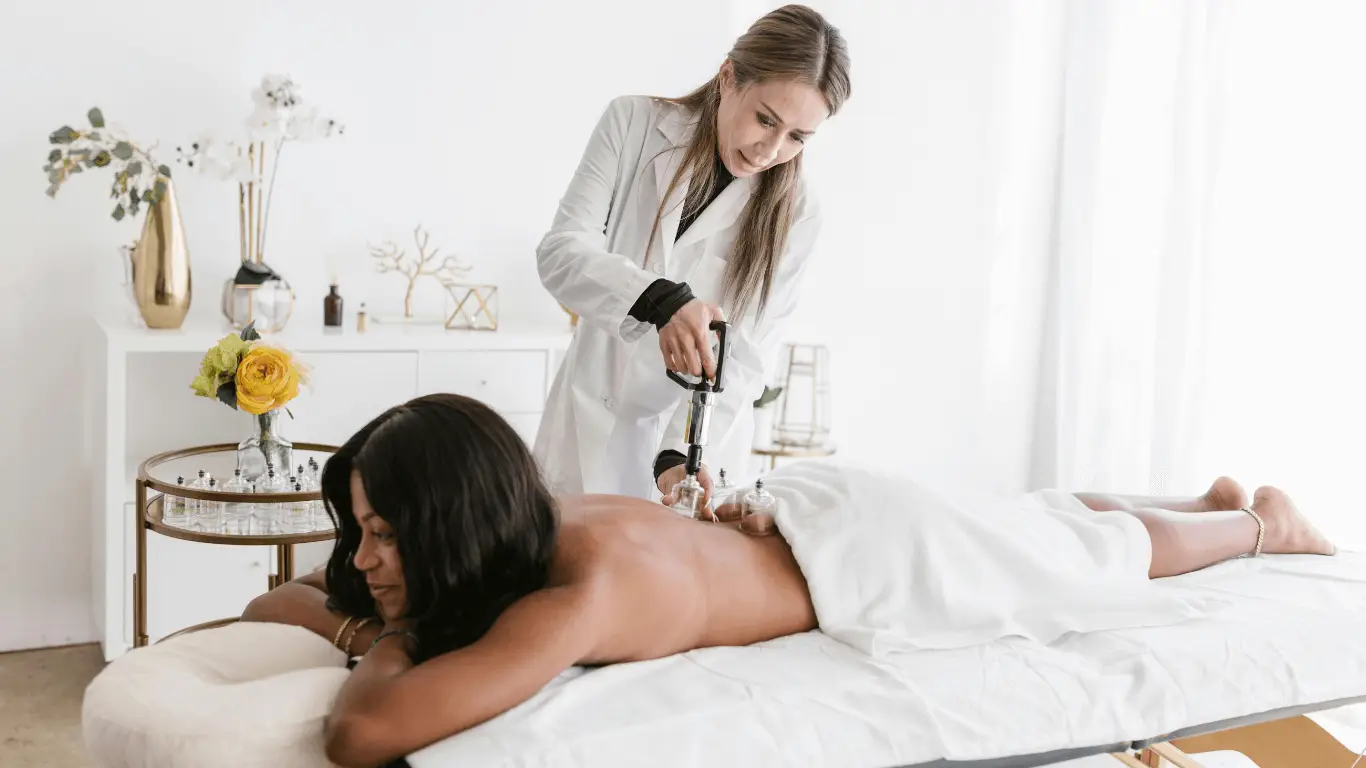
A session usually begins with cups placed on the skin, creating a pulling sensation that ranges from gentle to firm, depending on the technique and your comfort level.
If the cups are moved across the skin, the sensation can feel similar to a deep massage but without the same downward force. Sessions are generally controlled and adjusted in real time, allowing the practitioner to respond to how your body is reacting.
Temporary circular marks may appear afterward. These are a normal response to increased blood flow and typically fade within several days.
How Cupping Fits Alongside Massage
Cupping is not a replacement for massage. Instead, it offers a different way of working with the body.
Massage is often ideal for relaxation, stress relief, and overall muscle maintenance. Cupping may be helpful when muscles feel stuck, restricted, or unresponsive to pressure-based techniques.
Many people find that combining both approaches creates a more balanced treatment experience.
Who Is Drawn to This Type of Therapy
People often explore cupping when they are curious about alternative ways to address muscle tightness, recovery, or general discomfort. It is commonly used by those who prefer lighter contact, want to avoid deep pressure, or are looking to support circulation and mobility.
As with any wellness therapy, working with a trained professional helps ensure the technique is used safely and appropriately.
Choosing What Works for Your Body
Every body responds differently to touch, pressure, and sensation. Understanding how cupping works allows you to decide whether a lift-based approach feels like a good fit for your needs.
To explore trusted wellness providers and learn more about therapies such as massage and cupping treatments, visit MySpaList.com, where you can discover verified practitioners and services designed to support recovery, mobility, and overall well-being.