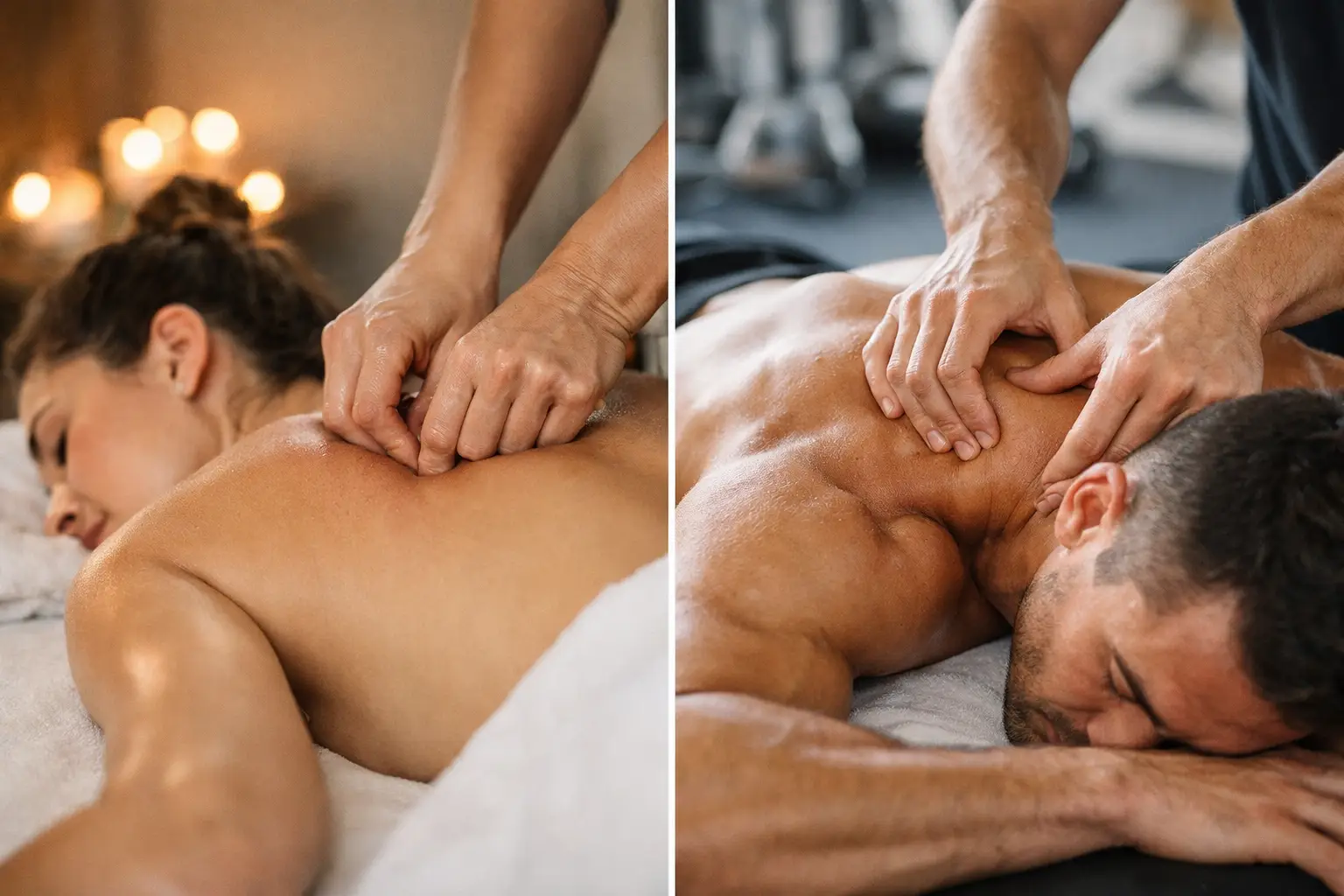
That dull ache between your shoulders after a desk-heavy week is not the same problem as a sharp knot in your lower back after lifting something wrong. That is why the answer to what massage is best for back pain depends on the kind of pain you have, how long it has been there, and how much pressure your body can handle.
If you want the short version, deep tissue massage is often the first modality people think of for back pain, but it is not automatically the best choice for everyone. For some people, Swedish massage helps more because it reduces guarding and stress-related tension. For others, myofascial release, sports massage, or trigger point work is a better fit because the pain is tied to movement patterns, overuse, or stubborn muscle restrictions.
What massage is best for back pain depends on the cause
Back pain is a broad category, not a single condition. Tight postural muscles, overworked spinal erectors, irritated fascia, old injuries, and stress can all create pain that feels similar at first. A massage that works well for one person can feel too intense, too general, or simply ineffective for another.
A useful way to think about it is this: the best massage matches the source of the tension. If your back feels generally tight, overworked, and stress-loaded, a full-body session with moderate pressure may do more than a highly aggressive treatment focused only on the painful spot. If you have a specific band of tightness, limited range of motion, or recurring knots, a more targeted therapeutic approach usually makes more sense.
Massage can help reduce muscle tension, improve circulation, increase mobility, and make daily movement easier. But if your pain includes numbness, tingling, weakness, fever, recent trauma, or pain shooting down the leg, massage should not be your first step without medical guidance.
The best massage types for back pain
Deep tissue massage
Deep tissue massage is one of the most common choices for back pain because it targets deeper muscle layers and chronic tension patterns. It can be especially helpful for people with stubborn knots in the upper back, tight lower back muscles, or pain linked to repetitive strain.
This approach uses slower strokes and firmer pressure. The goal is not to make the session hurt as much as possible. The goal is to reach restricted tissue without making your muscles tighten up defensively. Good deep tissue work should feel purposeful, not punishing.
It is often a strong option if your back pain feels muscular, localized, and chronic. It may be less ideal if you are very sensitive to pressure, flared up, or new to massage.
Swedish massage
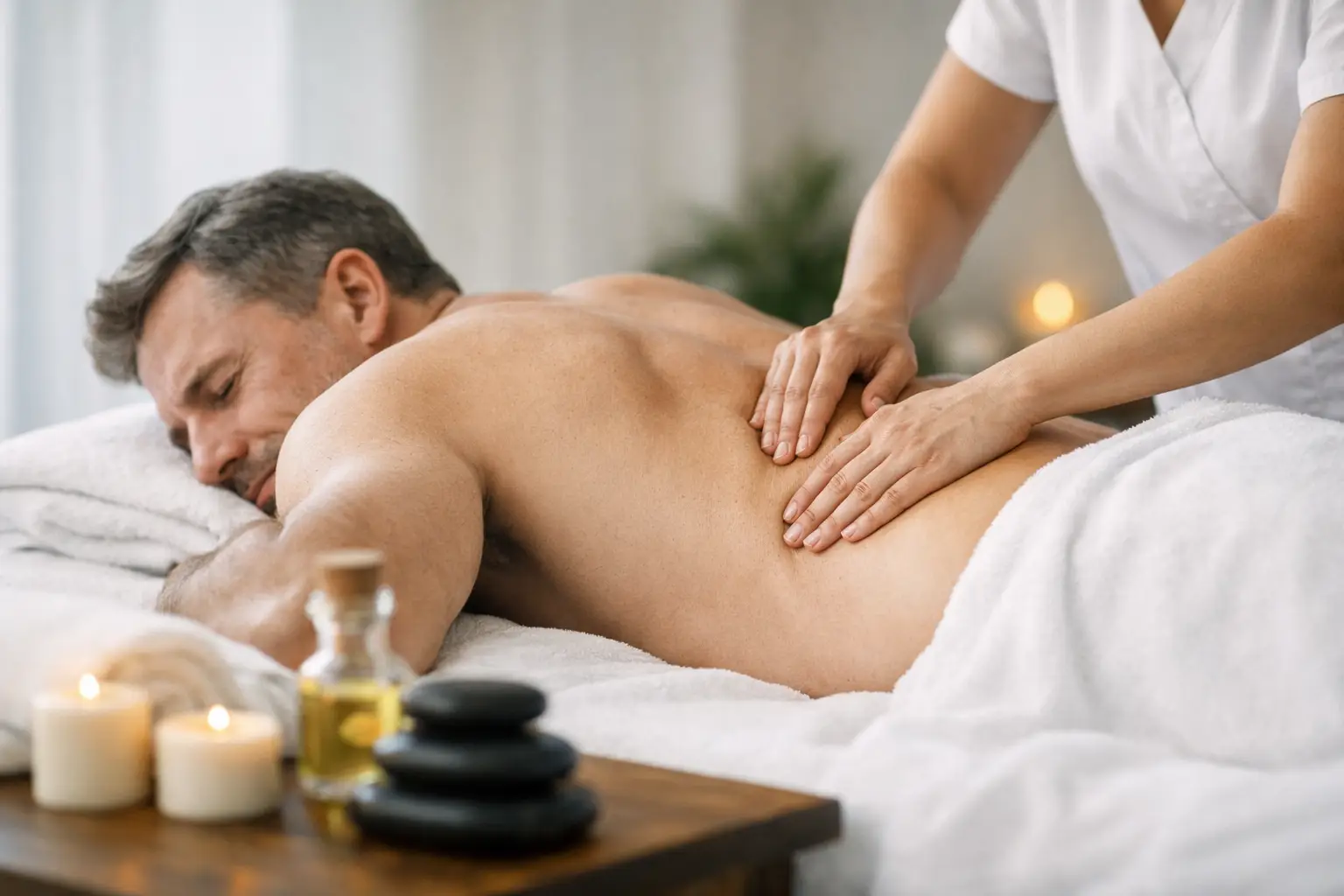
Swedish massage is sometimes overlooked by people who assume back pain requires intense pressure. In reality, Swedish massage can be one of the better choices for mild to moderate back discomfort, especially when stress, poor sleep, and general body tension are part of the picture.
This style uses long strokes, kneading, and lighter to medium pressure to relax the nervous system and reduce overall tension. If your back tightens up when you are stressed, sit too long, or clench through the day, Swedish massage may help more than a highly targeted session.
It is also a practical starting point for first-time clients who are not sure how their body will respond.
Myofascial release
If your back feels stiff, restricted, or hard to stretch, myofascial release may be worth looking for. This technique focuses on fascia, the connective tissue that surrounds muscles and other structures. Restrictions in this tissue can affect movement and create a pulling, tight sensation across the back.
Myofascial work is usually slower and more sustained than standard massage strokes. It can be very effective for people who feel like their pain is tied to limited mobility rather than just soreness.
This modality is often a good fit when back pain comes with a sense of compression, pulling, or chronic tightness that keeps returning.
Sports massage
Sports massage is not just for competitive athletes. It can be a smart option for runners, gym-goers, active adults, and anyone whose back pain is tied to training, recovery, or movement habits.
A sports massage therapist may work on the back, hips, glutes, and hamstrings together because those areas often contribute to back strain. That broader approach matters. Sometimes the pain is in your lower back, but the restriction driving it starts in the hips or posterior chain.
If your pain gets worse after workouts, long runs, golf, tennis, or lifting, sports massage is often one of the most relevant choices.
Trigger point therapy
Trigger point work focuses on specific tender spots that can refer pain to other areas. A knot near the shoulder blade, for example, may create aching across the upper back or neck. In the lower back, trigger points can create persistent soreness that feels deeper than simple tightness.
This can be very effective when your pain is easy to point to with one finger. The trade-off is that trigger point therapy can feel intense during treatment, especially if the area is already irritated.
Thai massage
Thai massage can help when back pain is tied to stiffness, limited flexibility, and poor movement patterns. It combines stretching, compression, and assisted positioning rather than traditional oil-based table massage.
For some people, especially those who feel tight through the hips and spine, Thai massage helps restore mobility in a way standard massage does not. For others, especially if pain is acute or certain positions aggravate symptoms, it may not be the best first pick.
So what massage is best for back pain in real life?
For everyday muscular back pain, deep tissue and Swedish massage are the two most common starting points. Deep tissue is often better for chronic knots and dense tension. Swedish is often better for stress-related tightness, general soreness, and people who want relief without heavy pressure.
If your back pain is linked to exercise or repetitive movement, sports massage makes sense. If it feels more like stiffness and restriction, myofascial release or Thai massage may be a better match. If you have one very specific painful spot, trigger point therapy can be useful.
The best choice is usually not about which modality sounds the most therapeutic. It is about what matches your symptoms right now.
How to choose the right massage therapist for back pain
The therapist matters as much as the modality. Two people can both offer deep tissue massage, but one may specialize in gentle therapeutic work while the other focuses on high-pressure sessions. Reading the service menu carefully helps, but so does looking for therapists who specifically mention back pain, injury recovery, mobility, myofascial release, or sports recovery.
It also helps to pay attention to session customization. Back pain is rarely solved by the same routine for every client. A good therapist will ask where it hurts, what makes it worse, how long it has been happening, and whether you want focused work or a more balanced full-body session.
If you are comparing local options, filters can save time. On a marketplace like MySpaList, that means you can narrow your search by modality, location, and provider details instead of sorting through general business listings that tell you very little about the actual service.
When massage can help and when it may not
Massage is often useful for muscular tension, postural discomfort, stress-related tightness, and recovery from overuse. It can also be part of a larger plan if you are managing recurring back discomfort from work, exercise, or long hours sitting.
It has limits. Massage does not correct every cause of back pain, and it is not a substitute for medical evaluation when symptoms suggest something more serious. If pain is severe, constant, or paired with radiating symptoms, bowel or bladder changes, weakness, or unexplained weight loss, that needs prompt medical attention.
Even in less serious cases, one massage is not always enough. Chronic patterns often improve with a few sessions plus changes in movement, posture, stress load, or recovery habits.
What to ask before booking
A quick conversation can help you avoid the wrong fit. Ask whether the therapist has experience with back pain, what kind of pressure they typically use, and whether they adjust the session if you are sensitive or flared up. If you know your pain gets worse with heavy pressure, say that upfront.
It is also smart to mention whether your pain is upper, mid, or lower back, whether it is tied to stress or activity, and whether you want relaxation, targeted treatment, or a mix of both. The clearer your goal, the easier it is to match with the right provider.
Back pain is common, but the right massage is rarely one-size-fits-all. If your pain feels like chronic muscle tension, deep tissue may be the best place to start. If your body is wound up, tired, and reactive, Swedish may get you better results. And if the issue is movement, fascia, or overuse, a more specialized modality can make all the difference. The best next step is simple: choose a therapist whose work fits the kind of relief your back actually needs.