Pregnancy can make even simple things feel harder than they should. Sleep gets awkward, hips get tight, your lower back starts carrying more than its share, and a familiar massage suddenly comes with a new question: is prenatal massage safe?
For many people, the answer is yes – with the right timing, the right therapist, and a few important precautions. Prenatal massage is widely used to help with muscle tension, swelling, stress, and overall comfort during pregnancy. But it is not a one-size-fits-all service, and there are situations where it should be modified or skipped.
Is prenatal massage safe during pregnancy?
In general, prenatal massage is considered safe for many healthy pregnancies when performed by a trained massage therapist who understands prenatal positioning, pressure, and contraindications. The key detail is that “safe” depends on your stage of pregnancy, your symptoms, and whether your provider has identified any risk factors.
That matters because pregnancy changes circulation, joint stability, blood pressure, and physical comfort. A massage therapist who works with prenatal clients should know how to adjust for those changes instead of using a standard full-body routine.
If you have a low-risk pregnancy and your OB-GYN or midwife has not placed restrictions on massage or physical activity, prenatal massage is often a reasonable option. If your pregnancy is high-risk, or if you are dealing with complications, it is smart to get medical clearance before booking.
When prenatal massage is usually considered appropriate
Many therapists begin offering prenatal massage after the first trimester, although policies vary. Some providers will work with clients in the first trimester, while others prefer to wait until week 12 or later out of caution and liability concerns.
The first trimester is not automatically off-limits, but it is a more sensitive period and some therapists choose not to book during that time. That does not necessarily mean massage is dangerous early on. It often means the therapist or spa has a conservative policy.
During the second and third trimesters, prenatal massage is more commonly available. At that point, the focus is usually practical relief: reducing low back tension, easing neck and shoulder strain, supporting better sleep, and helping the body feel less overloaded.
Why prenatal massage can help
The benefits are usually straightforward. Pregnancy shifts posture, changes how weight is distributed, and can increase muscle fatigue in the back, glutes, hips, legs, and feet. A properly adapted massage can help reduce that physical strain.
Some clients also find it helpful for stress and anxiety. Even when symptoms are mostly physical, the mental relief matters too. A calmer nervous system, less muscle guarding, and one hour of feeling supported can make a real difference.
Swelling is another reason people look for prenatal massage, especially in the legs and feet. Gentle massage may help with comfort, but this is one area where therapist judgment matters. Sudden or severe swelling can also signal a medical issue, so it should never be brushed off as a normal pregnancy inconvenience.
When to be cautious or skip massage
This is where the answer gets more specific. Prenatal massage may not be appropriate, or may require direct medical approval, if you have a high-risk pregnancy, preeclampsia, signs of preterm labor, severe swelling, uncontrolled high blood pressure, a blood clotting disorder, or a history of certain pregnancy complications.
You should also pause and contact your medical provider if you have vaginal bleeding, leaking fluid, regular painful contractions, sudden headache, chest pain, shortness of breath, or unusual dizziness. Those are not massage questions. They are medical questions.
Even in lower-risk pregnancies, some symptoms call for a modified session rather than a standard one. Nausea, reflux, sciatic irritation, or sensitivity to pressure can all affect what feels tolerable. A good prenatal therapist will ask about those issues before the session starts and adapt accordingly.
What makes a prenatal massage therapist qualified?
Not every massage therapist who accepts pregnant clients has the same level of prenatal experience. That is why screening matters.
A qualified prenatal massage therapist should be comfortable explaining how they position clients, what areas they avoid or treat cautiously, and how they adjust pressure during pregnancy. They should ask about your due date, trimester, symptoms, medical restrictions, and overall comfort level before starting.
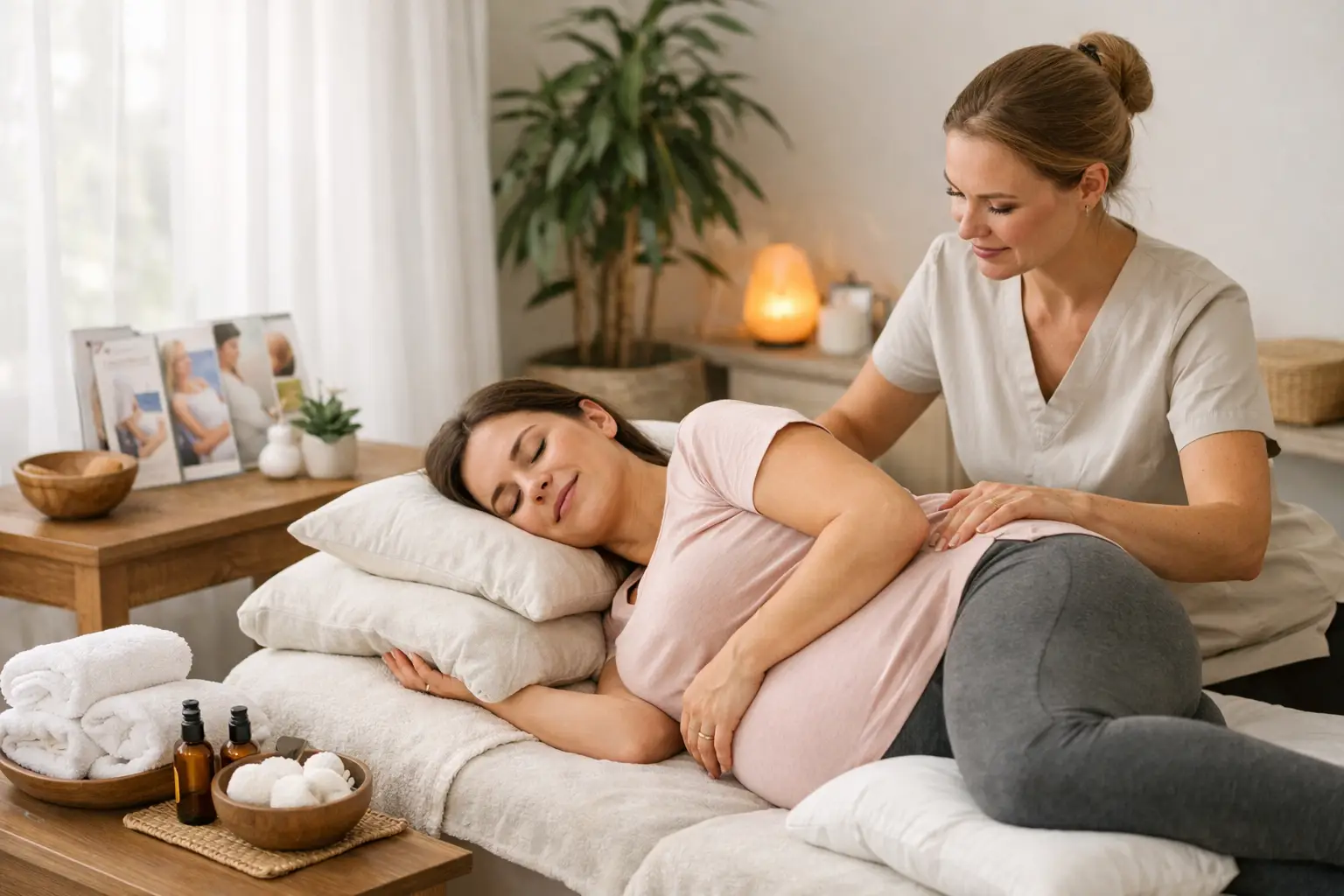
Positioning is one of the clearest signs of proper prenatal training. Pregnant clients are usually placed side-lying with supportive bolsters and pillows, especially later in pregnancy. Some providers use specially designed cushions, but side-lying is often the simplest and safest option.
Flat-on-the-back positioning for long periods is usually avoided in later pregnancy because the uterus can put pressure on major blood vessels and make you feel lightheaded or unwell. Deep, uncomfortable pressure is also not the goal. Prenatal massage should feel supportive, not aggressive.
If you are comparing local providers, look for clear mention of prenatal massage on the service menu rather than assuming any massage therapist offers it. A specialized directory like MySpaList can make that screening faster by helping you narrow providers by service type and location.
Common concerns about pressure points and labor
One reason this topic gets confusing is that prenatal massage is often mixed up with acupressure, reflexology, and labor-induction claims. You may hear that certain areas of the ankles, hands, or lower legs should never be touched during pregnancy because they could trigger labor.
In real practice, the evidence behind those blanket warnings is limited, and many prenatal therapists work carefully on the hands, feet, and legs without issue. What matters more is training, pressure, and context. A therapist should know how to work conservatively and avoid anything that feels painful or overstimulating.
The bigger concern with leg work is often circulation rather than labor. Pregnancy can increase the risk of blood clots, which is one reason therapists should take swelling, heat, redness, or calf pain seriously. Massage is not the right response to symptoms that could suggest a clot.
How to book a prenatal massage safely
If you are ready to book, a little screening goes a long way. Start by checking whether the therapist specifically offers prenatal massage, not just Swedish or therapeutic massage. Then confirm how far along you are and ask whether they have any trimester restrictions.
Before your appointment, share any relevant medical information. That includes high blood pressure, gestational diabetes, pelvic pain, recent spotting, history of preterm labor, severe swelling, or provider-imposed activity limits. You do not need to overexplain, but your therapist needs enough information to decide whether the session is appropriate.
On the day of the massage, speak up if anything feels off. That includes pressure, room temperature, positioning, dizziness, nausea, or discomfort lying a certain way. A prenatal session should be adjustable in real time.
Questions worth asking before you choose a provider
A few practical questions can help you filter options quickly. Ask whether the therapist has prenatal massage experience, whether they work with clients in your trimester, how they position pregnant clients, and whether they require medical clearance for certain conditions.
You can also ask what the session is designed to address. Some prenatal massages are more spa-oriented and focused on relaxation. Others are more therapeutic and aimed at back, hip, or neck tension. Neither is wrong, but they are not the same service.
If you know you want specific relief, such as lower back support or glute tension work, ask whether that is part of the therapist’s approach. Clear answers usually signal a provider who works with prenatal clients regularly.
Is prenatal massage safe near your due date?
Often, yes – if your pregnancy is uncomplicated and your provider has not told you otherwise. In late pregnancy, the practical goal is usually comfort. That might mean reducing hip pressure, easing foot fatigue, or helping you relax when sleep is harder to come by.
That said, the closer you get to your due date, the more important communication becomes. If you are having contractions, pelvic pressure that feels unusual, sudden swelling, or any symptom that seems different from your baseline, check with your medical provider before your session.
The best prenatal massage is not just about technique. It is about matching the session to what your body is doing right now.
The short answer
So, is prenatal massage safe? For many people with uncomplicated pregnancies, yes – when it is done by a therapist trained in prenatal care and adjusted for your stage of pregnancy and symptoms.
The smartest next step is not guessing. It is choosing a provider who clearly offers prenatal massage, asking a few specific questions, and checking with your OB-GYN or midwife if anything about your pregnancy falls outside the routine. A good session should leave you feeling more comfortable, not uncertain.