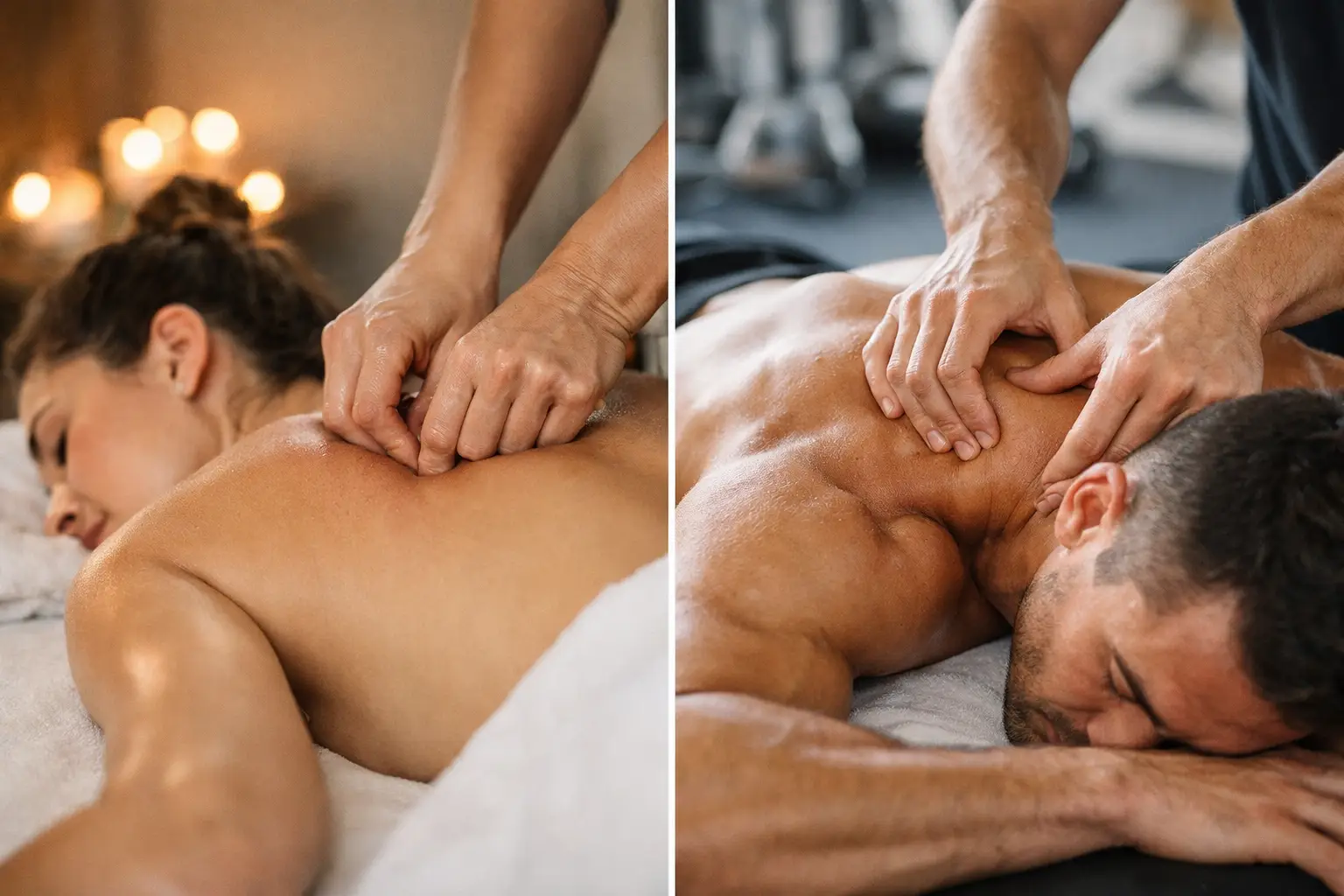
Usually, the reason you look for a sports massage therapist near you is that you need one. Your hamstrings might be tight after a long run, your shoulders might be sore from lifting, or you might be trying to stay ahead of soreness before a big event. No matter how you got here, the goal is clear: find a local person who knows how to help people recover, perform, and work with active bodies.
What a sports massage therapist actually helps with
You don’t have to be a professional athlete to get a sports massage. People who run, lift weights, ride bikes, play tennis on the weekends, train for charity races, or do any other activity that puts stress on their bodies repeatedly use it. It can also help people with physically demanding jobs who are always under stress and overworked.
A sports massage therapist usually works on muscles and movement patterns affected by activity. That could mean tightness in the calves after a lot of walking, in the hips from cycling, in the lower back from golf, or in the neck and shoulders from swimming or strength training. Because the work is based on function and not just stress relief, sessions often feel more focused than a general relaxation massage.
That being said, sports massage isn’t always the same. Some therapists use more pressure and work on specific trigger points. Others use a mix of stretching, compression, mobility-focused bodywork, and recovery work, depending on where you are in your training cycle. It’s important to compare providers because if you expect one style and get another, the session can feel off.
How to choose the right sports massage therapist near me
When you search locally, convenience is important, but it shouldn’t be the only thing that matters. The provider closest to you is not always the best for your needs. A good search starts with a few useful filters, such as location, availability, service focus, and whether the therapist works with active clients on a regular basis.
Pay close attention to the services the provider offers. Some therapists offer sports massage as a main service, while others list it as a service on a long list with few details. A listing that talks about recovery, athletic performance, mobility, pre- or post-event work, muscle maintenance, or specific body parts related to sports is usually better than one that just gives a general description.
Experience is important, but context is even more so. If you’re training for a half-marathon, a therapist who works with many runners might be a good fit. A therapist who primarily offers spa-style treatments may not know as much about managing stress as someone who works with weightlifters and CrossFit clients. There is no clear winner. It all depends on how you use your body and what kind of work you want.
The choice can also be affected by gender preference. For some clients, comfort affects how relaxed and open they are during treatment. That is a big deal, not a small one. If you know what you want, it’s better to filter early than to look through listings that don’t match your needs.
Signs a local provider is worth a closer look
A good listing should make it easy to quickly answer simple questions. Can you find out what services are available, where the therapist is located, what kind of setting they work in, and whether the treatment will help you reach your goal? If you have to guess, keep going.
The best local providers usually explain their work well. They say whether sessions are for recovery, injury prevention, maintenance, or working on specific muscles. They might also write down how long the sessions are, what kind of pressure they use, or what kinds of clients they usually work with. Clear service information helps you avoid making the wrong appointment and saves you time.
Reviews are helpful, but most helpful when they provide details. It’s better to get specific feedback about communication, problem areas, pressure control, professionalism, and consistency than just general praise. If a lot of people say that the therapist listened, changed their techniques, or helped them recover better between workouts, that tells you more than just a five-star rating.
Availability is another filter that works in the real world. A therapist may look good on paper, but if they are booked weeks in advance and you need help this week, they may not be the right fit. For ongoing care, being able to change your schedule is even more important. Only realistic recovery routines work.
What to ask before booking
You don’t have to do an interview, but a few details can help you avoid a bad fit. Ask the therapist whether they offer sports massage regularly, what a typical session looks like, and whether they adjust the work based on your level of activity or training goals. If you have a specific problem, bring it up briefly and see if their answer sounds clear and confident.
You should also ask about how much pressure and how well you can talk during the session. Sports massage doesn’t have to hurt a lot. Some clients want work that is deep and aggressive. Some people need focused treatment that works without making them sore for days. A good therapist should be able to change.
There is more to it if you are healing from an injury. Massage can help with a lot of things, but it cannot replace a doctor’s diagnosis or physical therapy when those are needed. If something feels sharp, unstable, or worse than it was before, it is a good idea to see a doctor first. The right therapist will respect that limit instead of making promises they can’t keep.
What to expect from your first session
You should talk before getting a sports massage for the first time, not start working right away. The therapist might ask you about your activities, where you hurt, your training schedule, past injuries, and what you hope to get out of the session. That information affects the treatment.
At that point, the session might focus on only one or two areas rather than your whole body. That can surprise people getting a massage for the first time, who expect a full-body massage. The point of sports massage is often to work on specific areas. If your problem is in your glutes, hip flexors, and hamstrings, it may be better to spend most of the session on those areas rather than rushing through everything.
If the work was focused and deep, it’s normal to feel some pain afterward. You shouldn’t feel like you’re going to die, though. Good bodywork should make you feel more flexible, less restricted, and more aware of how your body holds tension. If the therapist checks in, talks about what they see, and changes the pressure when necessary, that is usually a good sign.
Why local search matters more with sports massage
A sports massage is not usually just one appointment. Many people plan their vacations around races, tournaments, heavy training blocks, or recurring stress patterns. That makes your location very important. You are more likely to return to therapy if it is easy to reach from home, work, or the gym.
A specialized wellness marketplace can be more helpful than general search results in this case. You can compare providers by service type, location, and other useful filters, rather than going through unrelated listings, outdated directories, or businesses that barely mention sports massage. That saves a lot of time for people who want to quickly find independent therapists and spas near them.
A focused directory is also useful when you know exactly what you need. You might want a male therapist in your ZIP code who offers sports massage, or a provider who also offers deep tissue or assisted stretching. When you want to book the right session, not just any appointment, those details are important.
Common mistakes people make when booking
One mistake people often make is only looking at the price. Money is important, but the cheapest session isn’t always the best deal if the treatment doesn’t work or feels too general. If the therapist has a clearer sports focus, is more available, or receives better feedback from clients, a slightly higher rate might make sense.
Another error is making a reservation for the wrong modality. Deep tissue massage and sports massage can be similar, but they are not the same. A sports-focused provider may be a better fit if your goal is to get better through training or movement. If your main worry is tension all over your body, you might want to try a different style.
People also take too long. If you are already feeling tightness, limited range of motion, or soreness after working out that isn’t going away, getting treatment early may help more than waiting until your body is completely
Finding the right fit faster
The sports massage therapist with the best branding or longest list of services may not be the best for you. You will book again with the nearby provider who does the kind of work your body really needs, talks to you clearly, and fits into your schedule perfectly.
First, look for therapists in your area. Then, look for therapists who offer the services you need, have good reviews, and are a good fit for you. You are likely close to making the right choice if the listing answers your questions and the provider seems to understand your perspective. Recovery gets easier when the search does too.