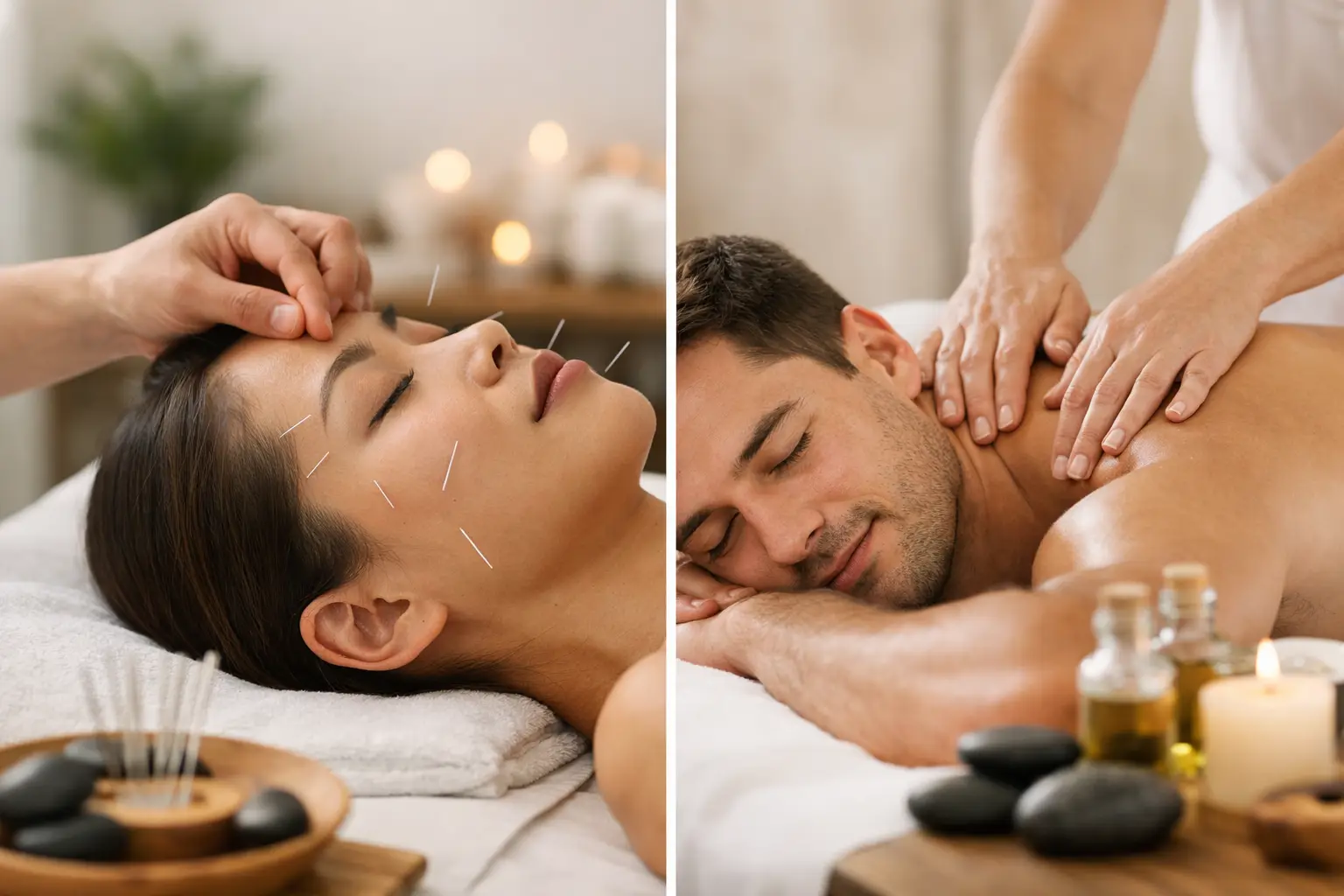
A stiff neck after long desk hours, lower back pain that keeps coming back, stress that sits in your shoulders – this is usually when the question starts: acupuncture vs massage therapy. Both are popular wellness treatments, both can help you feel better, and both are easy to find locally. But they work differently, and the better choice often depends on what you want relief from, how you like to be treated, and what kind of results you expect.
Acupuncture vs massage therapy at a glance
Massage therapy works through hands-on manipulation of muscles and soft tissue. Depending on the style, it may focus on relaxation, circulation, mobility, recovery, or targeted tension relief. Acupuncture uses very thin needles placed at specific points on the body to support pain relief, nervous system regulation, and other wellness goals.
If you want the simplest distinction, massage is usually more direct for muscle tightness you can feel. Acupuncture is often chosen for pain patterns, stress responses, and symptoms that do not always seem tied to one tight area. That said, there is overlap, and many people benefit from both.
What massage therapy is usually best for
Massage is often the easier starting point for first-time wellness clients because the experience feels familiar. If your issue is physical tension from work, workouts, travel, or poor posture, massage can offer faster body awareness and immediate soft tissue relief.
Deep tissue massage is commonly chosen for chronic tightness, while Swedish massage is better for general relaxation and stress reduction. Sports massage may be a good fit for athletes or active adults dealing with recovery, mobility limits, or overuse. Prenatal massage can support comfort during pregnancy when performed by someone trained for that specialty.
The main advantage of massage is that it is highly responsive in the moment. A therapist can feel where tissue is guarded, tight, or restricted and adjust pressure as the session goes on. If one side of your neck is clearly worse than the other, or your calves are tight after training, massage can address that directly.
The trade-off is that massage may be less appealing if you do not want firm pressure, do not like being touched for a full session, or have pain that feels more systemic than muscular. Some clients also feel sore afterward, especially with deeper techniques.
What acupuncture is usually best for
Acupuncture often appeals to people whose symptoms are not limited to one obvious muscle group. It is commonly used for pain, headaches, stress, sleep support, tension-related discomfort, and a general feeling that the body is out of balance.
For some clients, acupuncture feels less physically demanding than massage. You are not being worked on continuously, and the treatment may feel calmer and more still. That can matter if your body is already irritated, sensitive, or flared up.
Another reason people choose acupuncture is that it may help when tension and stress are tightly connected. If your jaw is tight, your shoulders are up by your ears, your sleep is off, and your body never seems to fully relax, acupuncture may feel like a better match than a session focused only on tissue manipulation.
The trade-off is straightforward: not everyone likes needles, even very small ones. Some people also prefer the more obvious, hands-on sensation of massage because it feels easier to understand. And while many clients find acupuncture deeply relaxing, others need a few sessions before they decide whether it is the right fit.
How to choose based on your goal
If your main goal is relaxation, either treatment can work, but the feel is different. Massage usually creates relaxation through touch, pressure, and muscle release. Acupuncture often supports relaxation by helping the body shift out of a stressed, wound-up state. If you want to feel your shoulders physically loosen during the session, massage may be more satisfying. If you want a quieter treatment with less physical manipulation, acupuncture may be a better option.
If your goal is pain relief, the details matter. Muscle soreness from exercise, desk posture, or repetitive strain often responds well to massage. Pain that comes with headaches, stress, jaw tension, or recurring flare-ups may lead some people toward acupuncture. For ongoing issues, many clients try both over time to see which gives longer-lasting relief.
If recovery is the priority, massage is often the more obvious choice for tight quads, overworked hamstrings, or post-training stiffness. But acupuncture can also be part of a recovery routine, especially if your body feels depleted, inflamed, or slow to bounce back.
If you are pregnant, both services can be helpful when provided by someone with the right training. In that case, provider experience matters more than the category alone. A prenatal massage specialist and an acupuncturist familiar with pregnancy care offer a very different level of confidence than a generalist.
What the appointment experience feels like
Massage therapy is usually more interactive. You may discuss pressure, sore spots, mobility limits, and preferred techniques before and during the session. The therapist may spend extra time on one area or change the plan based on how your body responds.
Acupuncture appointments often begin with a broader conversation about symptoms, stress, sleep, pain patterns, and overall wellness. Once the needles are placed, the treatment becomes quieter. Many people rest for a period of time with minimal interruption.
This matters because comfort is part of choosing the right service. Some people want active bodywork and clear pressure adjustments. Others want stillness and a treatment that does not require as much physical contact.
Cost, frequency, and practical decision-making
For many people, the best choice is not just about technique. It is also about what fits your schedule, budget, and local options.
Massage therapy is often booked as needed – after a hard week, during a pain flare, or as part of a monthly maintenance routine. Acupuncture may be recommended as a short series, especially when addressing ongoing symptoms. That can influence cost over time, even if one session price looks similar.
Availability also matters. In some areas, you may have several massage modalities nearby but fewer acupuncture providers. In others, both are easy to find. If you know you want deep tissue, prenatal massage, reflexology, or a therapist of a specific gender, a focused local search saves time. The same goes for acupuncture if you want someone nearby with convenient hours and clear service information.
When one is clearly the better first step
Choose massage first if your issue feels mechanical and localized. A tight upper back, overworked legs, limited range of motion, or tension from sitting too long usually points in that direction. It is also a good starting point if you already know you respond well to touch-based bodywork.
Choose acupuncture first if your symptoms are broader, your stress level is high, or you want a less hands-on approach. It may also be the better starting point if massage feels too intense right now or if your discomfort does not seem to improve much from pressure alone.
If you are unsure, think less about the label and more about the experience you want. Do you want someone working through your muscles directly, or do you want a quieter session focused on regulating pain and stress patterns? That answer often gets you closer to the right booking.
Can you combine acupuncture and massage therapy?
Yes, and many people do. Massage can help release tissue tension and improve mobility, while acupuncture may support pain management and calm the nervous system. Used together, they can complement each other rather than compete.
The key is timing and provider communication. If you are booking both, space them in a way that lets you notice how your body responds. Some clients like massage during physically demanding weeks and acupuncture during stressful or high-symptom periods. Others alternate regularly.
Finding the right local provider
The quality of the provider often matters as much as the service itself. A great massage therapist can tailor the session to your pressure tolerance, injury history, and goals. A skilled acupuncturist can make the experience feel clear, comfortable, and personalized instead of generic.
When comparing local options, look for service specificity, not just a general category listing. A provider who clearly offers sports massage, prenatal massage, deep tissue massage, or targeted acupuncture services gives you a better sense of fit. If you are trying to narrow down nearby options quickly, platforms like MySpaList help by organizing providers by service type, location, and other practical filters.
Acupuncture vs massage therapy is not really about which one is better overall. It is about which one fits your body, your symptoms, and your comfort level right now. Start with the goal that matters most, choose a local provider whose specialty matches it, and let your next session give you better information than guesswork ever will.