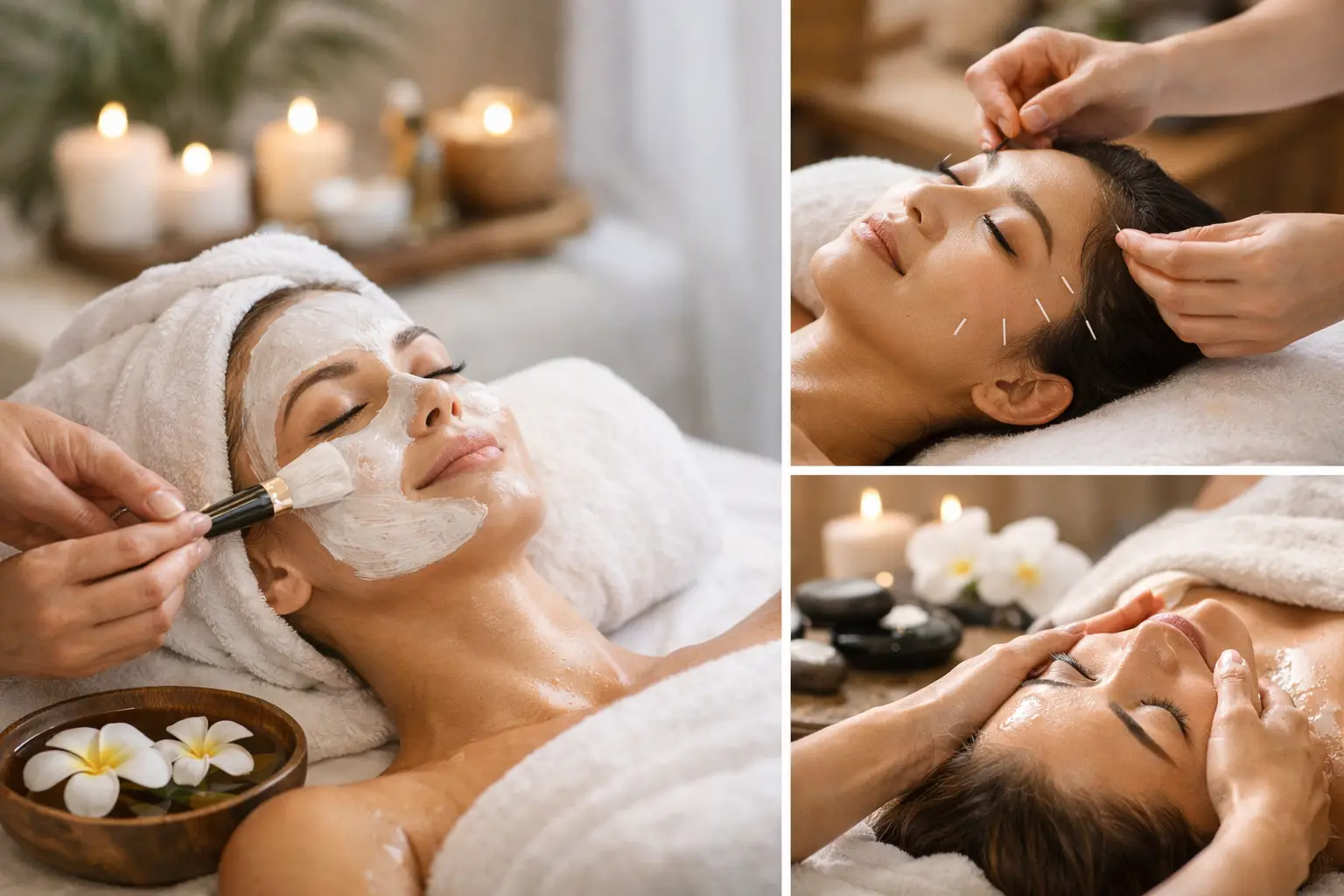
You don’t need ten browser tabs and an entire evening of research to book a massage, facial or body treatment. Wondering how to compare local spa services? The fastest way is to look at the details that truly matter to your experience: the service menu, provider qualifications, pricing, location, and how well the spa fits your goal.
This matters because not every spa is designed for the same client. One location might be ideal for a quick Swedish massage after work, but a different one is better for prenatal massage, lymphatic drainage, facials with an acne focus or a day at the spa. Sometimes the best choice is not the most elaborate, or the closest. It’s the one that fits what you need right now.
Start with goal not spa name
“Compare providers, but be specific about why you are booking. Other effects include a stress-relief massage, pain-focused bodywork, couples spa day and corrective skin treatment. This is the step people skip, and then compare the wrong things.
If you work at a desk and have tight shoulders you may want deep tissue, sports massage or myofascial work. If you’re pregnant, the prenatal experience beats a wide luxury menu every time. If you have reactive skin, what an esthetician specializes in is more important than a long list of add-ons. When you know if you are after relaxation, results, convenience or a specific modality, it becomes easier to compare local spa services.
How to compare local spa services on quality and what they really do
The service menu is the place to look, but not just for variety. A long menu can be helpful, but doesn’t have to mean deeper expertise. See if the spa clearly offers the treatment you want, and if that treatment looks like a core service rather than an add-on.
A massage practice could offer Swedish, deep tissue, hot stone, reflexology, Thai massage, prenatal massage, etc., with the duration of the session clearly stated. A skin studio could offer different acne facials, anti-aging treatments, chemical peels and sensitive skin options. That level of detail usually indicates the business understands the differences in client needs.
If the listings are vague and everything is just listed as massage or facial, you may have to do some digging before booking. Well-defined categories help you save time and avoid going to a service that is not really for you.
Match the outcome with the modality
This is where a lot of comparison fails. People tend to compare first by price, then by treatment type. You may pay the same price for a 60-minute Swedish massage as you would for a 60-minute deep tissue, but they are not the same. Same goes for a basic facial vs. one that’s geared toward congestion, hyperpigmentation or aging concerns.
Compare that to asking a simple question: Does this provider specialize in the outcome I want? If so that listing should be higher on your shortlist.
Consider specializing and getting credentials
Spa services are personal and the provider is as important as the name of the business. Just because it’s a beautiful space doesn’t mean they have the right therapist or esthetician for you.
Look for licensing, certifications if available and proof of specialization. Massage therapists may also specialize in sports recovery, prenatal massage, lymphatic drainage, or chronic tension work. Experience with acne treatments, corrective facials, sensitive skin, or advanced skincare services preferred for estheticians. Training and treatment are critical, even more so for an acupuncture or bodywork setting that also offers spa services.
Experience is not simply a more-is-better metric. A therapist with five focused years in prenatal massage might be a better fit than someone with fifteen years of very general work. Depends on what you want.
Comfort and gender preference
For many clients comfort is part of quality. Some people prefer a male or female therapist, especially for massage and body treatments. Others value clinical skill or availability more. Either way there is no wrong answer.
If gender of the therapist is important to you, factor that into your comparison early. “This quickly whittles down the field and saves time on providers that are not the right fit.”
Compare prices in context
Price is important but only if you compare apples with apples. A less expensive 50-minute session is not an apples-to-apples comparison to a 60- or 75-minute session. A basic cleansing facial should not be measured the same as a facial with extractions, LED or a peel.
Look at the session length, what’s included and if there are any pressures to upgrade. Some spas list a low starting price and then pile on add-ons at checkout. Some charge more up front but include more. If you are looking for value and not just the lowest number, compare the full treatment experience.
This section contains cancellation policy as well. Busy clients often forget about it until their plans change. A hard and fast 24- or 48-hour cancellation policy may be perfectly reasonable for your schedule, but it should be something you consider in your decision.
Reviews can be helpful, but only if you read them correctly
Reviews are helpful, star ratings are not enough. If you’re after specific pain relief, a spa with a 4.9 rating for atmosphere and tea service isn’t your best bet. On the other hand, a provider with a few less stars, who is consistently praised for deep tissue work, prenatal comfort, or skin results, might be the better choice.
Read for themes. If many people are saying the facilities are clean, appointments are on time, communication is clear, and the treatment quality is consistent, that’s a good indicator. Look out for complaints about short sessions, upselling, scheduling problems or a disconnect between what’s advertised and what you’re receiving.
It also helps to separate the expectations of luxury from the results of treatment. Some clients want a quiet and polished spa setting. Other people care more about whether the massage therapist can work on chronic neck tension. The best reviews are the ones that fit your own priorities.
Quality is location and availability
A spa might look perfect on the internet, but still be a poor fit if it’s hard to get to, impossible to book, or only available during your work hours. Convenience is not a small matter. It often decides if you will actually come back.
Compare spas by drive time, parking, neighborhood and appointment hours. When you need regular care — monthly facials or regular massage for stress or recovery — logistics become that much more important. You want a provider who fits into your life, not someone who makes every appointment a project.
That’s where a local directory can save time. Rather than sifting through general results, you can filter choices by service type, area and specific treatment needs all at once. For users who want to find independent therapists and spas in their area without wading through scattered listings, that kind of filter-first search is just more efficient.
Photos and listings should answer practical questions.
Photos can be useful, but not because they tell you a spa is upscale. They help you to measure professionalism, cleanliness and style of service. booking can be helped by a calm treatment room, organised reception area and clear images of the space especially for new clients.
But don’t let branding do all the heavy lifting. A good listing should also tell you what services are offered, who offers them, how long the appointments take and what kind of client the spa best serves. Strong listings mean less ambiguity. It is made by the weak.
Look for missing data
When it comes to local spa services, what they *don’t* say is often as important as what they do. If you find no clear service breakdown, no provider info, unclear pricing or no specialties mentioned, you may be spending more time checking the basics that should be readily available.
That doesn’t mean the spa is automatically low quality. This could simply be that their online presence is underdeveloped. But if speed and clarity are important to you, then full listings get extra weight.
Make a short list, then select by fit
When you’ve narrowed down your options, compare three to five providers side by side. More than that usually slows the decision down. Look at treatment match, credentials, pricing, reviews, convenience and comfort factors. Usually, just quit looking for the one perfect spa and one will pop up.
If two providers are equally strong, the tie breaker is your immediate need. If you want muscle tension, pick the one with better availability. If you have skin issues, select the more specialized esthetician. Or if you want ongoing care, choose the one closest to you. The correct answer can vary from month to month.
To know how to compare local spa services is really about filtering for relevance. Booking gets faster and the odds of a better experience go up if you compare based on your goal rather than generic popularity. Usually, the best provider is the one who makes your next appointment easy before you even walk in the door.