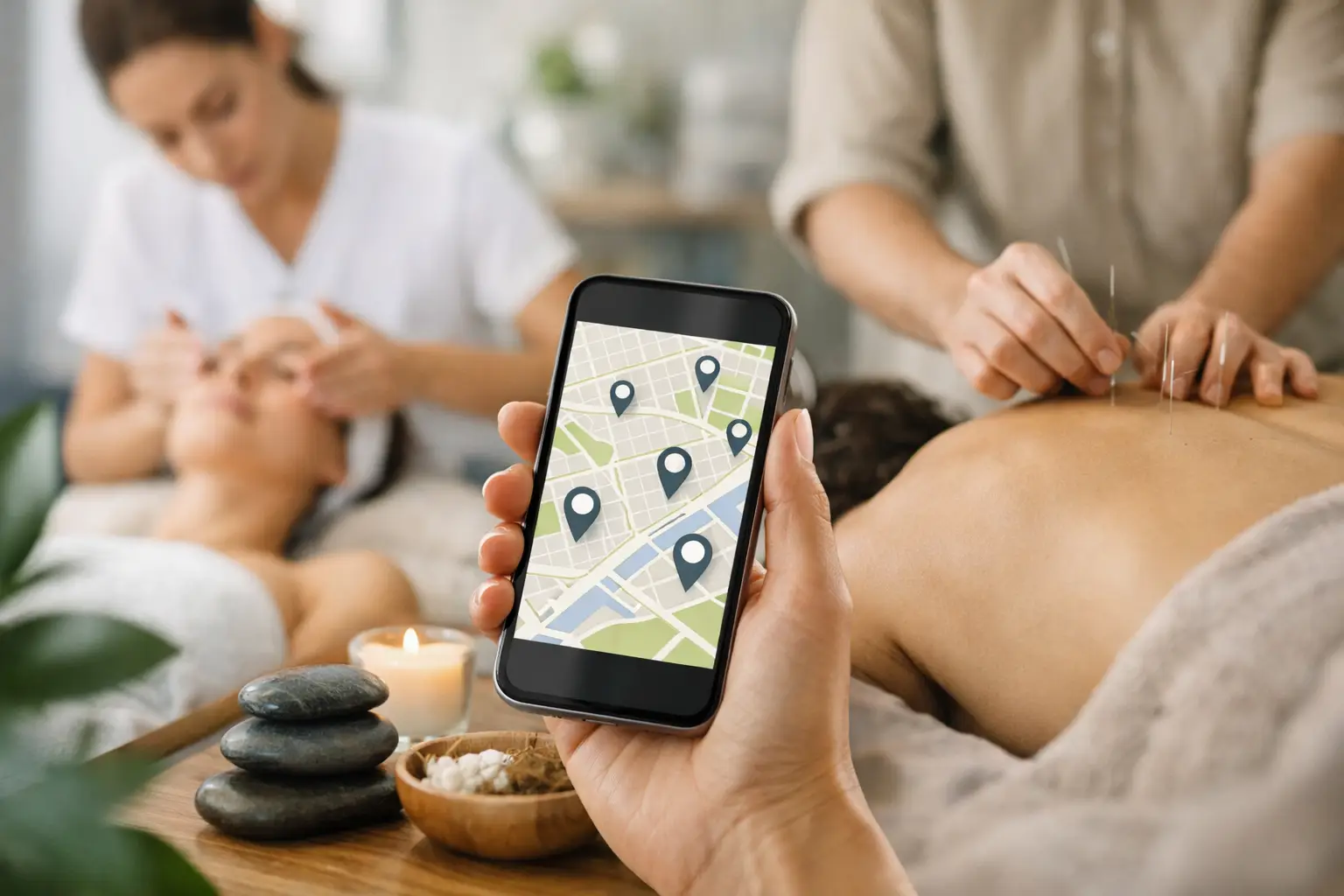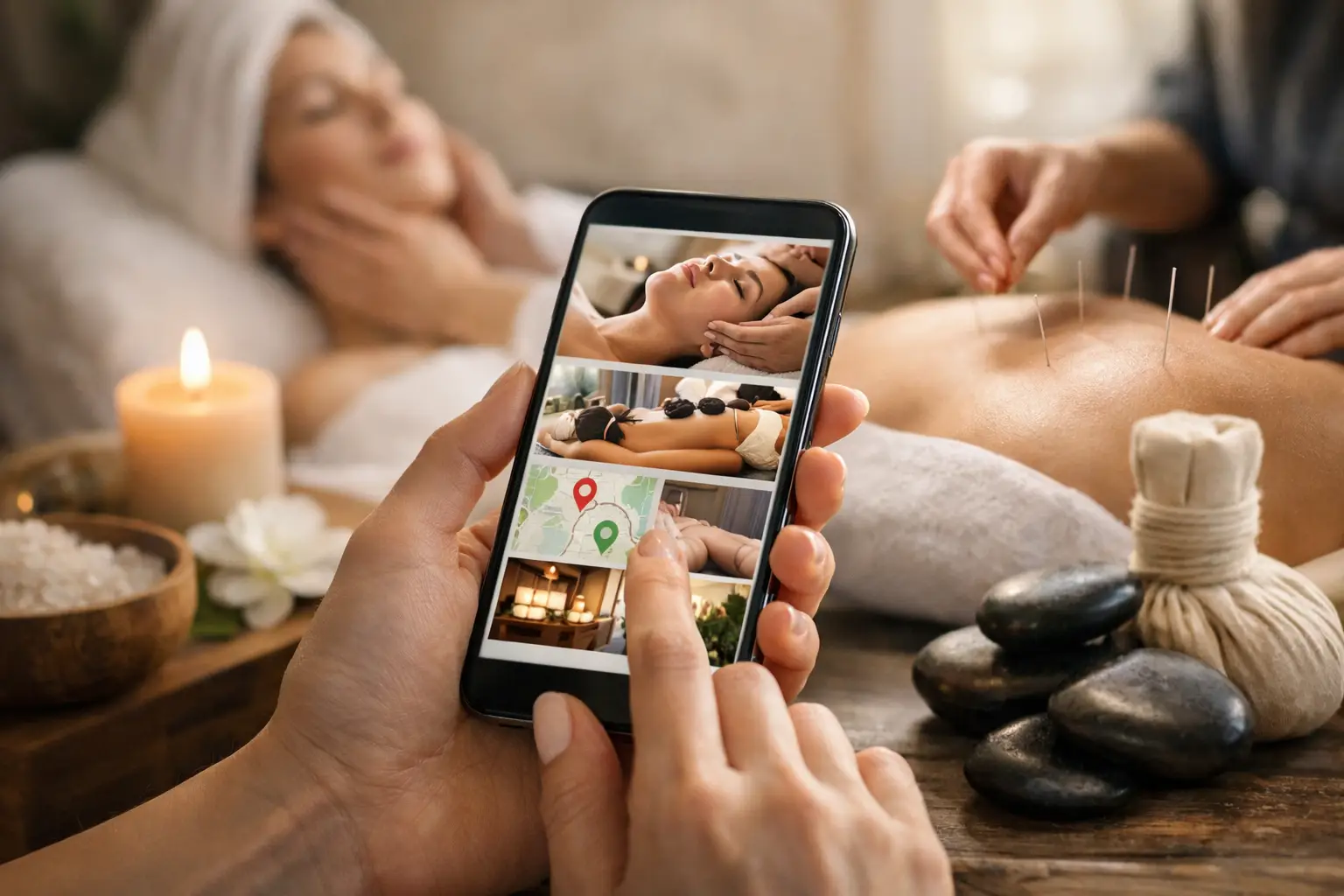
You usually notice a bad spa search tool when you need help quickly. Maybe your neck is locked up after a long week, you want a prenatal massage near home, or you need a last-minute facial before an event. A good spa finder apps review should answer one question first: can this app help you find the right provider nearby without wasting time?
That standard matters because not all spa and wellness apps are built for the same kind of search. Some are really booking marketplaces. Some are broad beauty directories. Some are closer to classified listings with limited details. If you are looking for a specific service, therapist preference, or local availability, the difference shows up fast.
Spa finder apps review: what users should check first
The first thing to look at is search intent. If you already know you want deep tissue massage, Thai massage, reflexology, acupuncture, or a specific skin service, the app should let you search that exact category. If it only lets you browse a vague wellness or beauty bucket, you end up sorting through irrelevant results.
Location quality matters just as much. Plenty of apps say they are local, but their listings can be thin, outdated, or pulled from broad business databases. That leads to the most common frustration in this category: seeing a provider in results, clicking through, and still not being sure what services they actually offer, whether they are independent, or whether they fit your needs.
The strongest spa finder apps make three things easy from the start. They show providers near your area, they separate services clearly, and they help you narrow results without making you dig through multiple screens. If an app fails on those basics, its design does not matter much.
What separates a useful spa app from a generic directory
A lot of consumers start with broad search engines because they are familiar. The problem is that general search is not built around wellness-specific filtering. You may get a mix of spas, salons, med spas, massage chains, solo practitioners, and unrelated businesses all in the same results page. That can work if your needs are broad, but it breaks down when your search is specific.
A better option is a platform that is organized around service type rather than just business name. That means you can search by modality, compare nearby options, and get closer to a decision in fewer steps. For users who care about therapist gender, prenatal-safe services, sports recovery, or targeted bodywork, that structure saves time.
This is where niche matters. An app focused on massage, spa services, esthetics, and acupuncture usually gives more relevant results than a beauty marketplace trying to cover everything from haircuts to injectables. More categories are not always better. Sometimes they just create more noise.
The best features in a spa finder apps review
The most useful feature is filtering that reflects how people actually book wellness services. That includes service category, location, and often provider type. For many users, therapist gender is not a minor preference. It is part of what makes booking comfortable. The same goes for highly specific treatment types like lymphatic drainage or prenatal massage.
Good listings also need enough detail to support fast decisions. Service menus, business type, city, and treatment focus should be visible without forcing users to jump to another site just to confirm basics. If the app only shows a name, a star rating, and an address, it is not doing enough.
There is also a trade-off between instant booking and better discovery. Some apps are excellent when the provider is already integrated into the platform’s scheduling system. But if that integration is missing, the listing can feel incomplete. Other platforms are stronger at helping users compare local businesses first, even if the final contact step happens outside the app. Neither model is automatically better. It depends on whether your priority is speed to booking or confidence in the match.
Reviews are helpful, but they should not be the only signal. In massage and spa services, the right fit often depends on technique, treatment goals, comfort level, and specialization. A provider with fewer reviews but a clear specialty in sports massage or myofascial release may be a better choice than a broadly reviewed business with vague service descriptions.
Where many spa apps fall short
The biggest weakness in this category is overgeneralization. Many apps lump spa services, massage therapy, skincare, and wellness into a single browse experience that does not reflect how consumers search in real life. If you want an esthetician, you should not have to filter past massage listings. If you need acupuncture, you should not be shown nail salons because they happen to fit a broad wellness tag.
Another issue is outdated local coverage. National apps often look strong in major cities but become less useful in smaller markets or suburban areas. A polished interface cannot fix thin inventory. For users outside dense urban centers, local listing depth is often more important than app design.
There is also the problem of chain-first visibility. Some apps naturally favor businesses with larger marketing budgets, stronger integrations, or paid placement. That can make it harder to discover independent therapists and spas, even though those providers often offer the exact specialized services users are trying to find.
How to judge app results before you book
Start by searching for the exact service you want, not just “spa” or “massage.” If the app can handle specific searches well, it is probably organized in a way that supports real decision-making. If results become messy as soon as you get specific, that tells you a lot.
Next, check whether listings help you compare providers on meaningful details. Can you tell whether the business focuses on relaxation, therapeutic massage, recovery work, skincare, or acupuncture? Can you tell if the service menu matches your need? Can you see enough local context to avoid wasted calls?
Then look at result quality in your area. An app may test well in Los Angeles or New York and still be weak in midsize cities. If you only see a handful of incomplete profiles, the platform may not be your best option for local discovery.
Finally, pay attention to whether the app supports exploration as well as intent. Sometimes you know exactly what you want. Other times you just know you need relief, skincare help, or a wellness appointment nearby. The best platforms can handle both. They support specific filters without making broad local browsing feel random.
A practical way to compare spa finder apps
If you are deciding between a few apps, compare them using the same search. Try a service with clear intent, like prenatal massage, deep tissue massage, lymphatic drainage, Thai massage, or acne facial, and use your actual ZIP code. This exposes how well each app handles local relevance.
Look for four signals. First, are the results truly nearby and clearly categorized? Second, do listings explain what each provider offers? Third, can you narrow the field based on preferences that matter to you? Fourth, do you feel closer to booking after five minutes, or more confused?
That last question is the one that matters most. A spa finder app should reduce decision friction. It should not turn a simple search into a research project.
For users who care most about discovering independent therapists and spas, a specialized local directory often works better than a general beauty platform. That is especially true when the search involves therapeutic massage, acupuncture, or esthetic services rather than broad self-care browsing. A focused marketplace like MySpaList fits that need because it is organized around service-specific local discovery instead of generic wellness listings.
Who benefits most from specialized spa search tools
Busy professionals usually need speed. They want to find nearby options fast, confirm the service, and move on. Prenatal and postnatal clients often need clarity and comfort, which means filtering matters. Athletes and recovery-focused users tend to search by modality, not by general business type. Experienced wellness consumers may already know they want reflexology, hot stone massage, lymphatic drainage, or a specific type of bodywork.
Those are not edge cases. They are normal local search behaviors in wellness. That is why specialized search tools tend to outperform broad directories for serious users. The more specific your treatment goal, the more valuable a structured spa finder becomes.
A strong app does not need flashy features. It needs accurate local coverage, useful filters, and listings that help you make a choice without opening ten tabs. If a platform can do that consistently, it is worth keeping on your phone. The best spa search experience is the one that gets you from stressed and scrolling to booked and on your way.