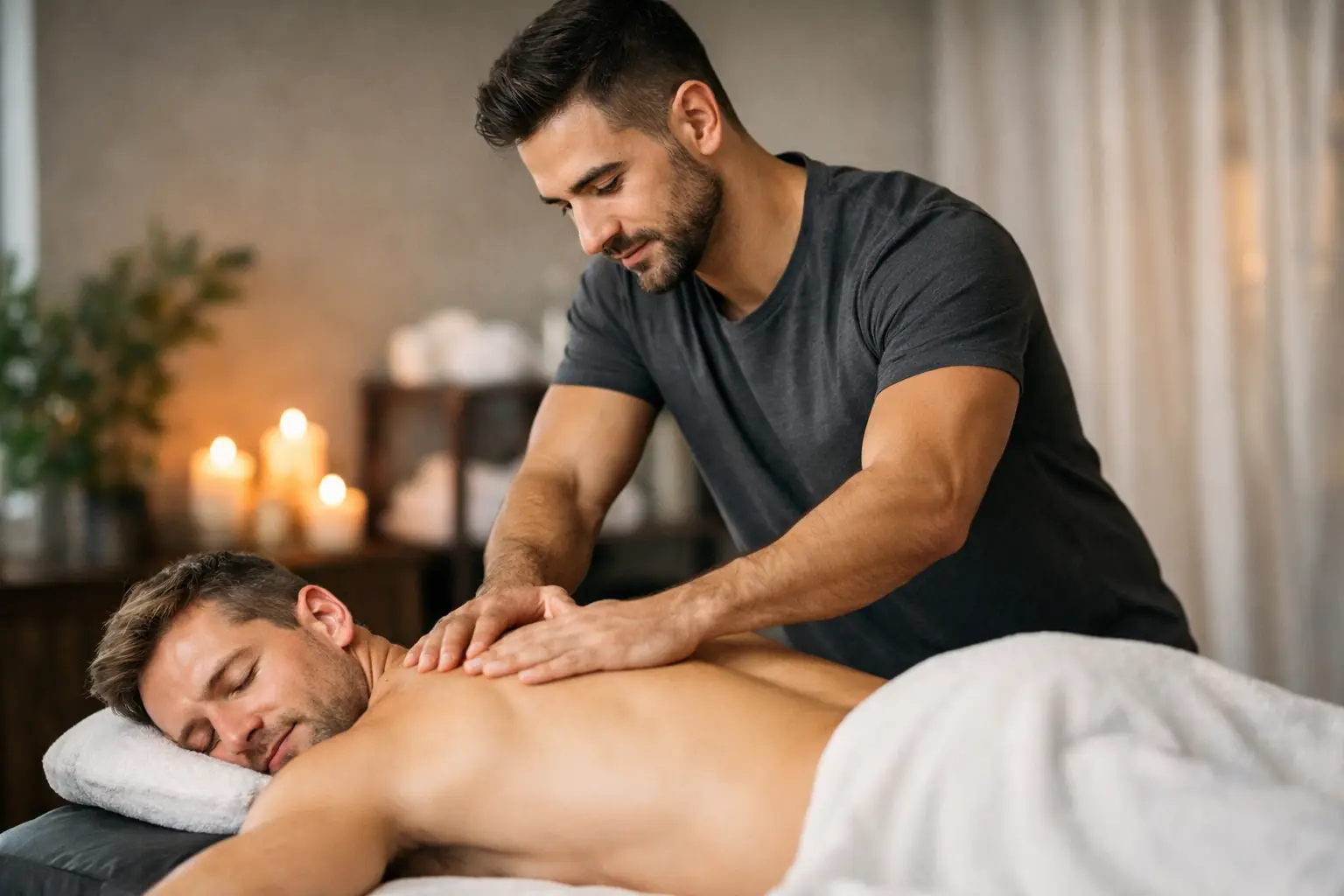
If you need to find male massage therapist options quickly, the hard part usually is not whether providers exist. It is sorting through generic search results, outdated directories, and profiles that do not clearly show therapist gender, specialties, or availability. When your preference is specific, speed matters. You want a short path from search to booking.
That is especially true if you are not casually browsing. Maybe you want deeper pressure for chronic tension, prefer a male provider for sports recovery, or simply feel more comfortable with that fit. Whatever the reason, a better search starts with the right filters and a clear idea of what you want from the session.
How to find male massage therapist listings that match your needs
The fastest approach is to narrow the search before you compare providers. Start with location, then therapist gender, then service type. That sounds simple, but many general platforms force you to piece together those details from scattered profile pages. A wellness-specific marketplace makes the process much more direct because it is built around actual treatment categories rather than broad business listings.
Once you filter by city or ZIP code, look for the massage style you need. Deep tissue, sports massage, Swedish massage, prenatal massage, reflexology, Thai massage, and lymphatic drainage can all lead to very different provider matches. If you only search for a male therapist without selecting the modality, you may end up comparing professionals who are nearby but not trained in the kind of bodywork you want.
This is where being specific saves time. A client dealing with post-workout soreness needs a different match than someone booking a relaxing massage after a stressful month. Gender preference is one part of the decision. Treatment goal is the other.
What to check before you book
A provider profile should answer the practical questions fast. If it does not, keep looking. The most useful listings clearly show location, services offered, therapist gender, business type, and enough detail to tell whether the therapist is aligned with your needs.
Look closely at the service menu first. A therapist may offer general massage, but that does not automatically mean they focus on the pressure level or technique you want. Deep tissue and sports massage are common reasons people seek a male provider, but that is not universal. Some clients want gentler work, better stretching support, or a therapist experienced with mobility and recovery.
Then review the business setup. Is the provider an independent therapist, part of a spa, or working in a shared wellness practice? That affects the overall experience. Independent therapists may offer a more specialized approach and flexible treatment focus. Spa settings may feel more polished and convenient for clients who want amenities or a broader menu of services. Neither is better in every case. It depends on what matters most to you – targeted bodywork, atmosphere, scheduling, or convenience.
Find male massage therapist options by specialty, not just proximity
Distance matters, but it should not be the only filter. The closest provider is not always the best match, especially if you are dealing with pain, recovering from training, or booking bodywork regularly.
A male massage therapist who specializes in sports recovery may be worth a longer drive than someone five minutes away who mainly performs relaxation massage. The same goes for myofascial work, trigger point therapy, or therapeutic deep tissue. If your body has a clear issue, the therapist’s specialty matters more than a small difference in travel time.
At the same time, convenience still counts. If you plan to book often, a great therapist across town can become less practical than a very good therapist nearby. That trade-off is personal. Some clients prioritize the strongest technical fit for occasional treatment. Others want a provider they can realistically see every two weeks without rearranging their whole day.
Reading reviews the right way
Reviews help, but only if you read them with a purpose. Star ratings alone do not tell you much. Focus on comments that mention pressure, professionalism, communication, punctuality, and the overall treatment style.
If you are searching for a male massage therapist because you want stronger pressure, look for language that confirms that directly. Phrases like “effective deep tissue,” “great for athletic recovery,” or “helped with shoulder and back tension” are more useful than generic praise. On the other hand, if comfort and bedside manner matter most, look for mentions of clear communication, respectful boundaries, and a calming environment.
Be careful not to overreact to one negative review or trust a perfect rating without context. A therapist can be excellent for one type of client and not ideal for another. What matters is whether the feedback lines up with your own goals.
Why provider gender matters for some clients
For many people, therapist gender is not a minor preference. It shapes comfort, confidence, and the overall treatment experience. Some clients feel more at ease with a male provider because of pressure style or sports-oriented work. Others simply know from past appointments what kind of fit helps them relax.
There is no need to justify that preference. It is part of finding care that works for you. Wellness services are personal, and comfort affects outcomes. If you cannot settle into the session, communicate clearly, or trust the therapist’s approach, even a technically solid massage may not feel right.
That said, gender alone does not determine technique, pressure, or professionalism. There are male therapists who specialize in relaxation work and female therapists who deliver very strong deep tissue sessions. Use gender as one filter, not the only one.
Questions worth answering before your appointment
Before booking, get clear on what you want from the session. Are you trying to reduce stress, address a specific pain point, recover from training, or test whether this therapist is a good long-term fit? A little clarity upfront makes it easier to compare listings and choose well.
You should also think about session format. A 60-minute appointment may be enough for general tension, but more targeted work often benefits from a longer session. If you have several problem areas, a shorter booking can feel rushed.
Pressure preference is another key factor. Some clients assume a male massage therapist will automatically use firm pressure. That is not always true, and it is better to confirm than assume. Good therapists adapt to the client rather than forcing a fixed style.
Using a local wellness marketplace saves time
If you are trying to find independent therapists and spas near you in seconds, a specialized marketplace is usually more efficient than a general search engine. Instead of digging through mixed results, you can browse providers by service type, location, and therapist gender in one place.
That is the value of a focused platform like MySpaList. It supports local wellness discovery without making you jump between maps, social profiles, and outdated directory pages. When you already know what you need, better filtering makes the process faster and cleaner.
This is especially helpful in larger metro areas where the number of listings can work against you. More choices are only useful if you can narrow them quickly. Filtering by massage modality, geography, and gender removes a lot of noise.
When to keep searching
Sometimes the right move is not booking the first decent option. If a profile is vague, the service menu is too broad to be meaningful, or the reviews do not tell you anything about treatment style, keep going.
The same applies if the therapist checks one box but misses two others. A nearby male provider with unclear specialties may not be as good a fit as a slightly farther therapist whose profile clearly matches your goals. Small gaps in information can turn into big disappointments once you are on the table.
A useful standard is this: by the time you book, you should know where the provider is, what services they offer, what kind of client they seem best suited for, and whether the setting feels right for you. If those basics are missing, your search is not done yet.
A better search leads to a better session
Finding the right massage therapist is rarely about one factor alone. It is the combination of gender preference, service type, location, comfort, and treatment goals that creates a good match. The more precisely you search, the less likely you are to waste time on listings that are technically relevant but not actually useful.
When you find a provider who fits your preferences and your body’s needs, booking gets easier the next time too. The goal is not just to find any appointment. It is to find the right one close to home, with the right pressure, in the right setting, so the session actually does what you need it to do.